BGP Route Optimization:
Border Gateway Protocol (BGP) is the backbone of the internet, responsible for routing traffic between autonomous systems (AS). While BGP is highly scalable and reliable, default configurations often lead to suboptimal routing decisions. BGP route optimization helps network engineers control traffic flow, improve performance, reduce latency, and ensure better utilization of network resources.
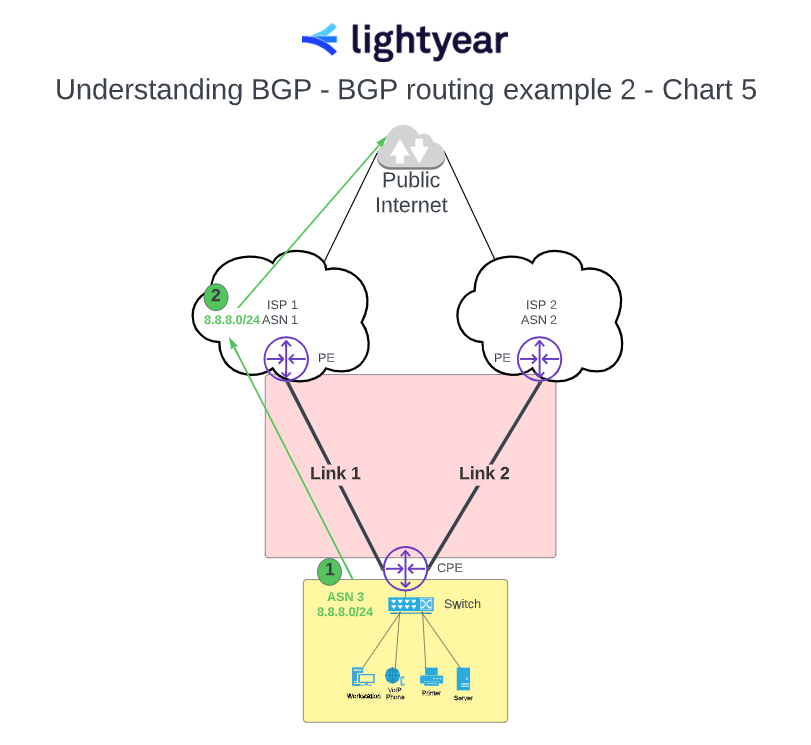


Why BGP Route Optimization Matters
BGP does not select routes based on bandwidth or latency. Instead, it relies on attributes and policies. Without optimization, traffic may follow longer paths, congest links, or overload a single ISP connection. Route optimization enables precise control over inbound and outbound traffic, improves redundancy, and aligns routing behavior with business intent.
Key BGP Attributes Used for Optimization
BGP uses several attributes that influence path selection. Understanding and tuning these attributes is the foundation of route optimization.
Local Preference is used within an AS to influence outbound traffic. Higher local preference values are preferred and are commonly used to select a primary ISP.
AS Path affects inbound traffic. By prepending your AS number multiple times, you can make a path appear longer and less attractive to upstream providers.
Multi-Exit Discriminator (MED) helps influence how neighboring ASes choose entry points into your network, especially when multiple links exist between the same providers.
Communities allow tagging routes with predefined meanings, enabling upstream providers to apply routing policies such as traffic shaping or regional preference.
Inbound vs Outbound Traffic Engineering
Outbound traffic engineering is generally easier because it is fully controlled within your AS. Adjusting local preference and routing policies allows you to steer traffic toward preferred links.
Inbound traffic engineering is more complex because it depends on how upstream providers interpret your announcements. Techniques such as AS-path prepending, selective prefix advertisement, and BGP communities are commonly used to influence inbound paths.
Prefix-Based Route Optimization
Announcing more specific prefixes allows finer control over traffic flow. For example, advertising a /24 subnet through one ISP and a larger aggregate through another enables selective traffic steering. However, excessive de-aggregation should be avoided as it increases global routing table size.
BGP and Traffic Engineering
Modern networks combine BGP with traffic engineering strategies to meet application requirements. Latency-sensitive traffic can be routed through premium links, while bulk traffic can use cost-effective paths. When combined with MPLS or SDN controllers, BGP becomes a powerful tool for intent-based routing.
Common Pitfalls to Avoid
Improper route optimization can lead to routing instability or suboptimal failover. Excessive AS-path prepending may cause route flapping. Misconfigured MED values can result in asymmetric routing. Always validate changes in a staging environment and monitor routing behavior using looking glass servers or route analytics tools.
Best Practices for BGP Optimization
Keep routing policies simple and well-documented. Use communities instead of heavy AS-path manipulation when possible. Monitor traffic patterns continuously and adjust policies based on real usage data. Ensure redundancy without overcomplicating the routing design.
Conclusion
BGP route optimization is not about forcing traffic onto a single path, but about creating intelligent, resilient, and efficient routing policies. With careful tuning of attributes, prefix control, and monitoring, BGP can deliver performance that matches modern application and business needs.

Parveen Jindgar
Engineering Leader
I am an engineering leader with over 20 years of experience working on large-scale packet networks in Service Provider and latency-sensitive environments. My work has centered on end-to-end architectural ownership of backbone and edge infrastructures — spanning platform and vendor selection, routing and control-plane design, and the evolution of networks under real operational and economic constraints. PacketBytes is a personal space where I document the engineering thinking behind these systems — examining architectures, control planes, and design trade-offs as they behave under real traffic, real failures, and real operational pressure, beyond configuration and into intent.